
If you’ve ever felt like your marketing budget disappears into ads that stop working the moment you stop paying for them, you’re not alone. That’s the exact problem inbound marketing is built to solve.
As a freelance digital marketer in pathanamthitta specializing in SEO, content marketing, and inbound marketing, I’ve spent years helping businesses shift away from constant promotion and toward strategies that keep bringing in customers long after the work is published. This isn’t theory — it’s a framework built from real projects, real mistakes, and real results.
In this post, I’ll walk you through what inbound marketing actually looks like in practice, a real example of it working, the most common mistake I see businesses make, and a step-by-step process you can start using today.
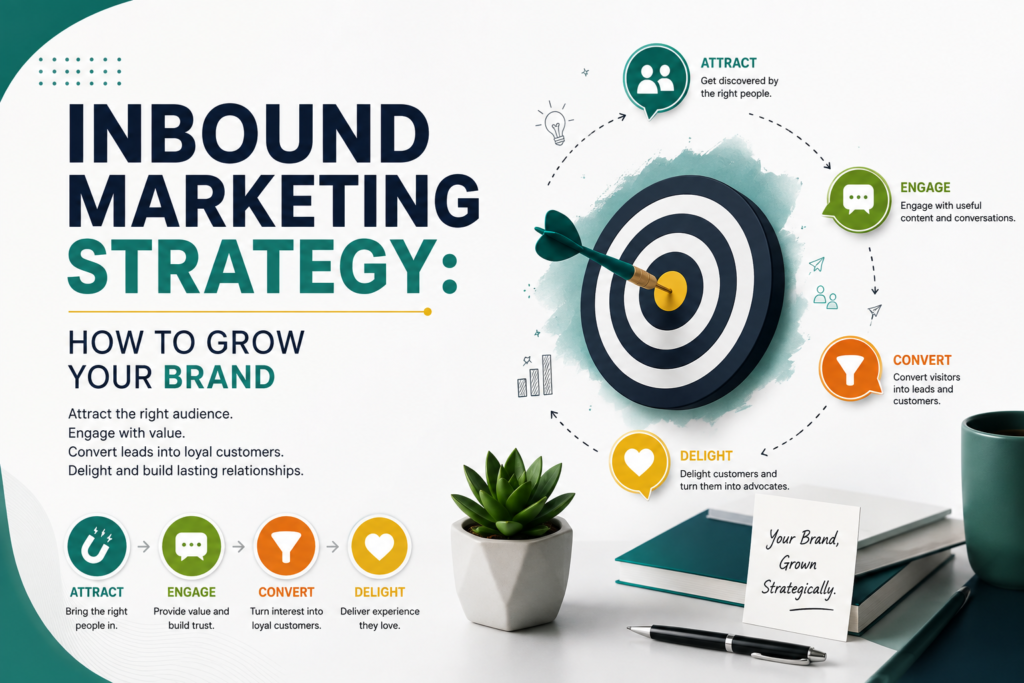
What Is Inbound Marketing, Really?
Inbound marketing is the practice of attracting customers by creating valuable content and experiences tailored to them, rather than interrupting their day with ads and promotions they didn’t ask for. Instead of chasing attention, you earn it — through blog content, SEO, social media, and resources that genuinely help your audience.
The result is a brand growth strategy that compounds over time. A single well-optimized blog post can keep generating traffic and leads for years, which is something a paid ad can never do once the budget runs out.
A Real Example: How Inbound Marketing Helped a Small Business Grow
One project that stands out for me involved a small local business that was struggling to generate consistent leads. We rebuilt their marketing around three pillars:
- SEO fundamentals — fixing technical issues and optimizing pages around the keywords their customers were actually searching for
- Valuable blog content — answering real customer questions instead of just listing services
- Consistent social media presence — reinforcing the content and keeping the brand visible between searches
Within a few months, organic traffic increased and the business started receiving more customer inquiries directly through their website — without spending more on ads. That’s the core promise of content marketing strategy done right: it turns your website into a lead-generating asset instead of a digital brochure.
The Biggest Mistake Small Businesses Make
The most common mistake I see, and the one that held this business back before we started, is focusing almost entirely on promotions instead of education.
It’s a natural instinct — you want customers now, so you talk about your sale, your service, your product. But if that’s all your content does, you’re skipping the step where trust actually gets built. Search engines and customers both respond to content that answers questions, solves problems, and demonstrates expertise. Promotion-only content rarely does any of that.
The fix is simple in concept, harder in execution: lead with value. Teach your audience something useful before you ask them to buy. Once they trust you, the sale becomes far easier.
My Step-by-Step Inbound Marketing Process
This is the same process I use with every client, including the small business example above:
- Understand the target audience. Before writing a single word, know who you’re talking to — their questions, frustrations, and what they’re searching for.
- Perform keyword research. Identify the primary and secondary keywords your audience is actually using, prioritizing intent over volume.
- Analyze competitors. Look at what’s already ranking, and find the gaps — topics they haven’t covered well, or angles they’ve missed.
- Build an SEO-focused content plan. Map out topics, keywords, and formats so content builds on itself instead of existing as random one-off posts.
- Publish and optimize. Write for humans first, then structure the content for search engines — headings, meta descriptions, internal links, and alt text all matter.
- Track performance with analytics. Monitor traffic, rankings, and inquiries so you know what’s working and what needs adjusting.
A Tip That Isn’t Obvious: Target Long-Tail, Question-Based Keywords
One of the most practical things you can do today is write content around the exact questions your audience is searching for, using long-tail keywords rather than broad, competitive terms.
Instead of trying to rank for “inbound marketing,” a post answering “how does inbound marketing help a small business grow” faces far less competition and attracts more qualified visitors — people who are already looking for exactly what you offer. This is one of the fastest ways to see traction with a brand growth strategy, especially if you’re just getting started with content marketing.
Inbound Marketing vs. Traditional (Outbound) Marketing
| Inbound Marketing | Outbound Marketing | |
| Approach | Attracts customers with valuable content | Interrupts audiences with ads/promotions |
| Cost over time | Lower long-term cost, compounds | Ongoing spend required to sustain results |
| Trust building | Builds trust through education | Relies on repetition and visibility |
| Longevity | Content keeps generating traffic for years | Stops working once spend stops |
| Best for | Long-term brand growth, SEO, lead generation | Short-term promotions, launches |
Common FAQs About Inbound Marketing Strategy
How long does inbound marketing take to show results? It varies, but many businesses start seeing measurable increases in organic traffic and inquiries within a few months of consistent effort — as was the case with the small business example above.
Do I need a large budget to get started with inbound marketing? No. Inbound marketing is often more accessible than paid advertising because it relies on creating valuable content rather than continuous ad spend, though it does require consistent time and effort.
What’s the difference between content marketing and inbound marketing? Content marketing is one of the core tools used within a broader inbound marketing strategy, which also includes SEO, social media, and lead nurturing.
Should I still run ads if I’m doing inbound marketing? Not necessarily an either/or — many brands use ads for short-term goals while inbound marketing builds long-term, sustainable growth. It depends on your timeline and budget.
Conclusion: Start Small, Stay Consistent
Inbound marketing isn’t a quick fix, and it’s not about publishing more content for the sake of it. It’s about genuinely helping your audience before you ask them for anything, and doing it consistently enough for search engines and customers to notice.
If you’re just getting started, don’t try to do everything at once. Pick one part of the process — start with keyword research, or write one piece of content answering a real question your customers ask — and build from there. That’s exactly how the small business in this post grew: one honest, useful piece of content at a time.